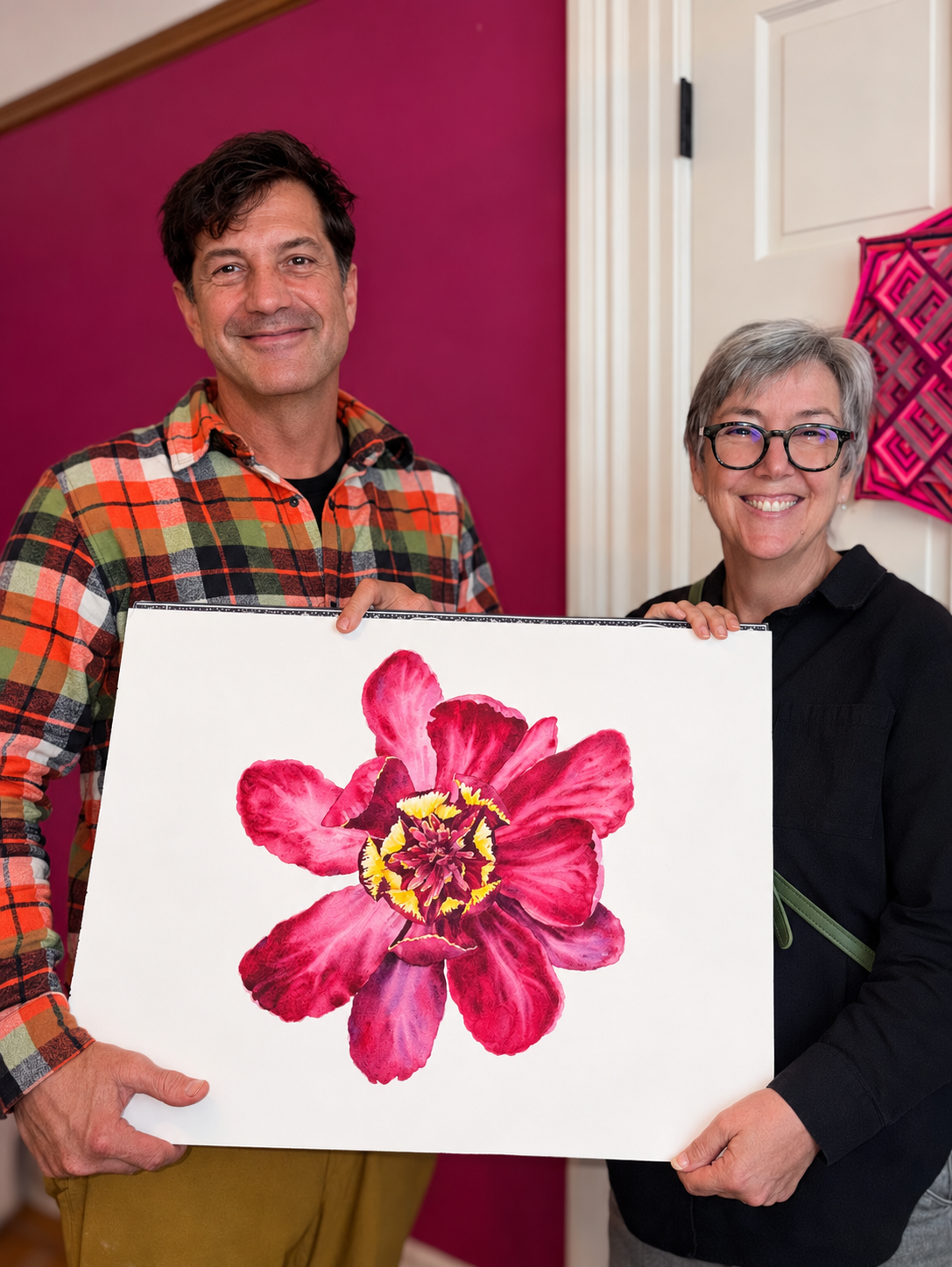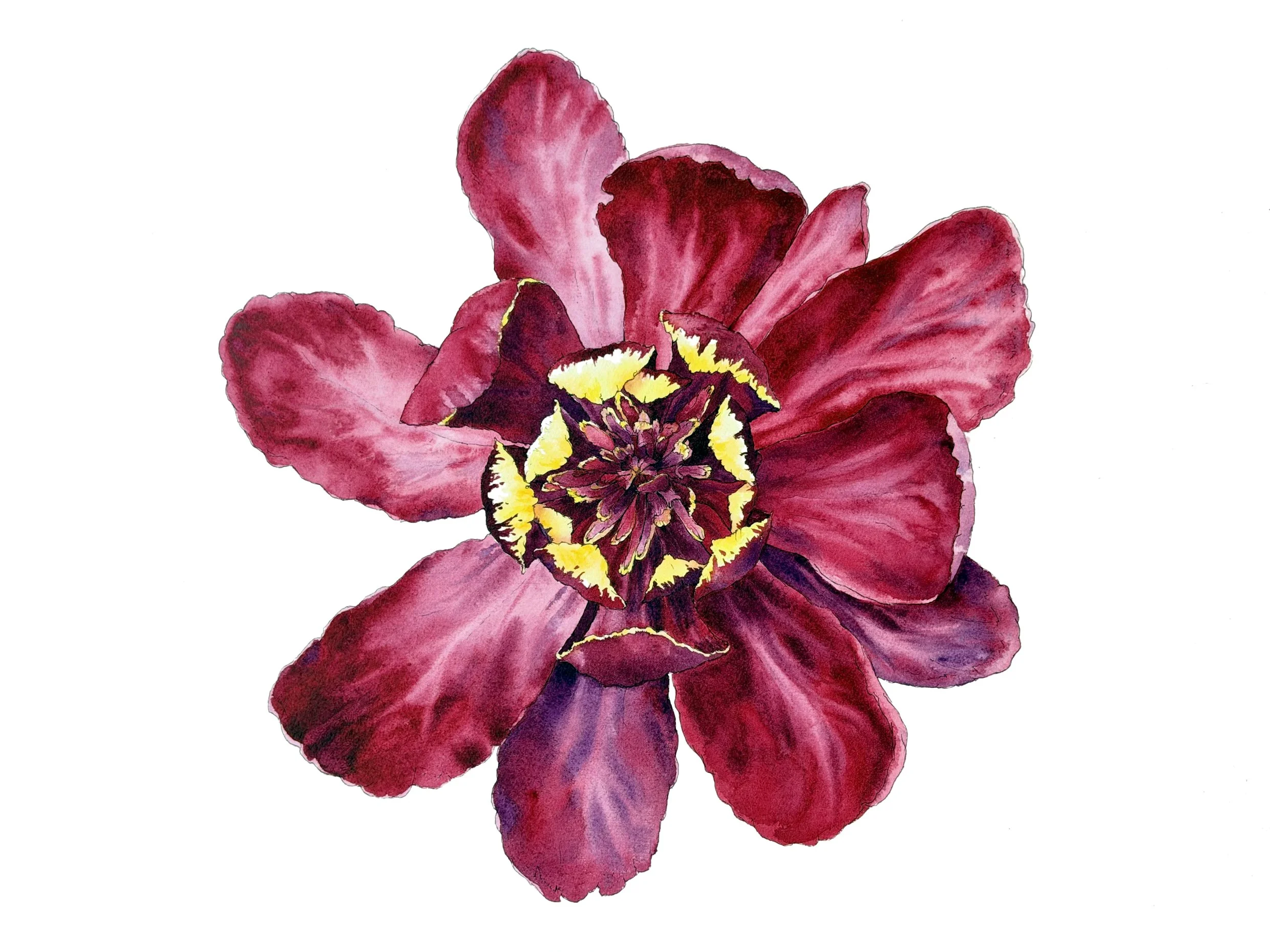
Calycanthus, I. Fogpatch Landscapes commission
Watercolor on paper, 2026 - 18x24”
On painting a flower and coming to understand what it meant to someone else.
It starts with a person
When someone shows me a flower they love, I see the flower first. They might see a garden they haven’t been back to in years, or the person who used to walk through it with them. Sometimes they can tell me right away why it matters. Sometimes we have to sit with it awhile before either of us has words for it.
That’s the part I want to get right when I paint a flower: what it feels like for that person to see it again.
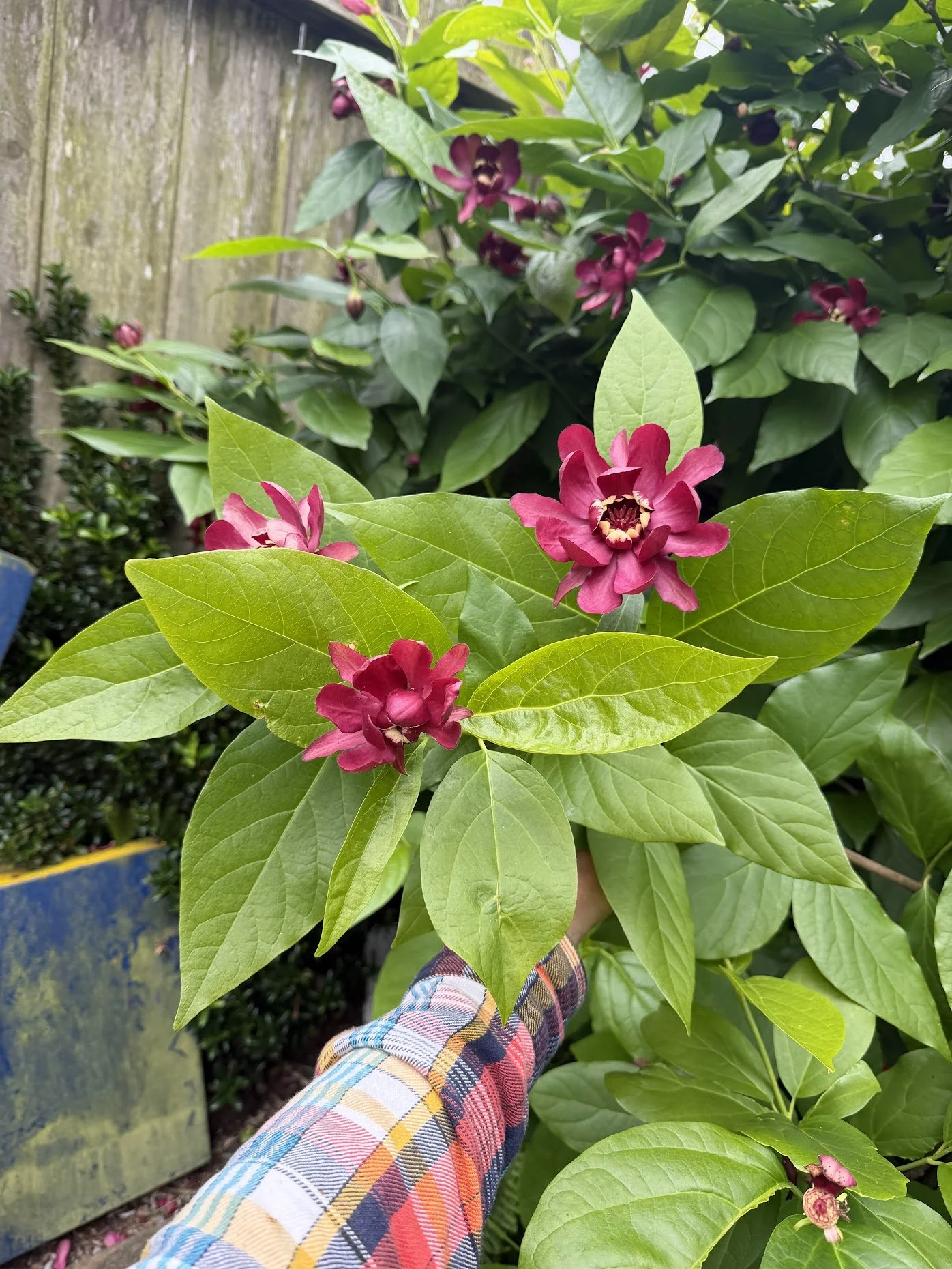
This floral portrait began in May, with a visit to the garden of DeeAnn Budney of Fogpatch Landscapes.
Taking the time to look
There is something wonderful about being invited into someone's garden. You begin to see what catches their attention, what they've chosen to grow, and what they care for.
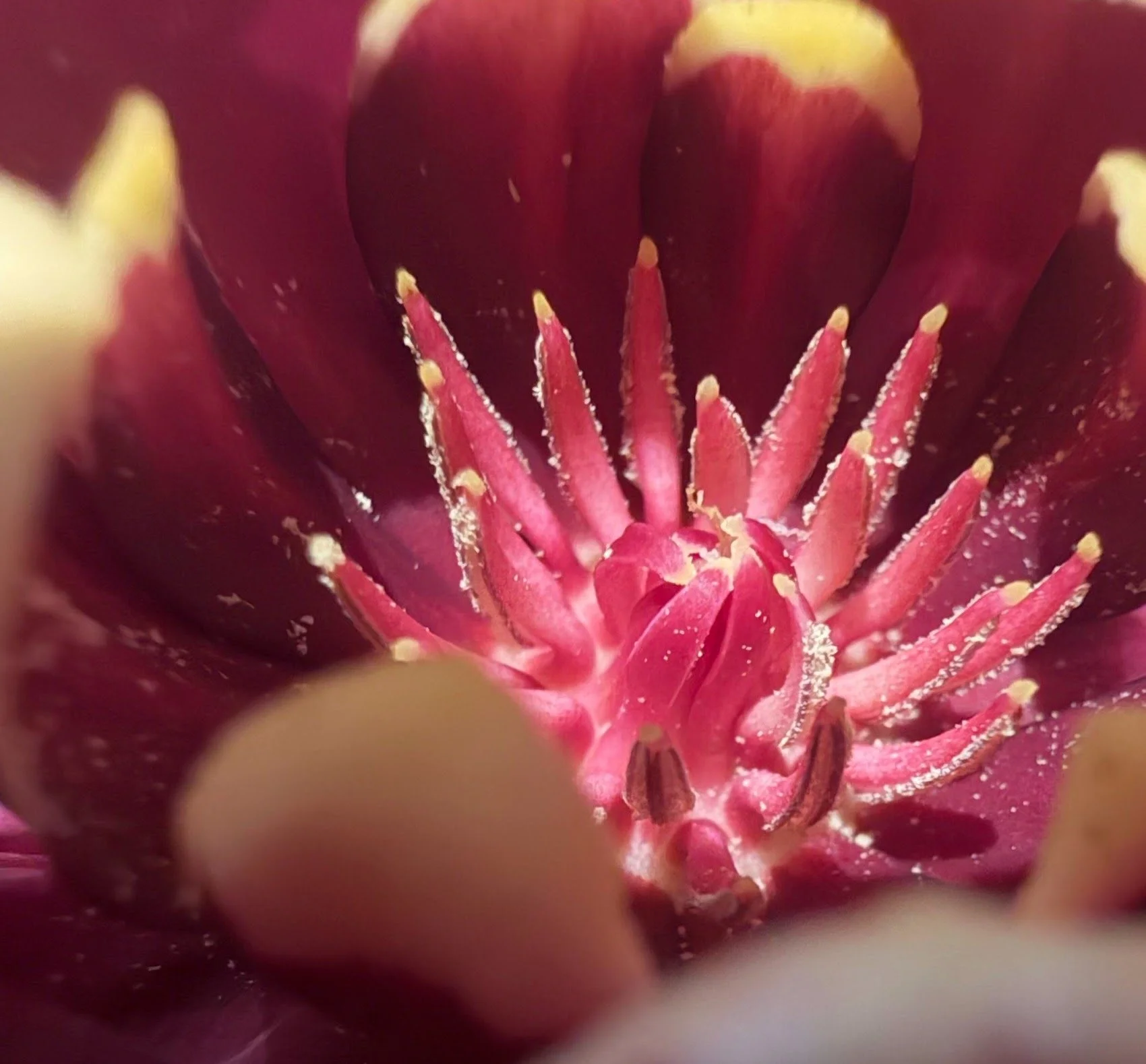
I spent time looking at this extraordinary flower, following the shapes of its petals, discovering the colors hidden in its shadows. The more I looked, the more there was to see.
Finding the colors
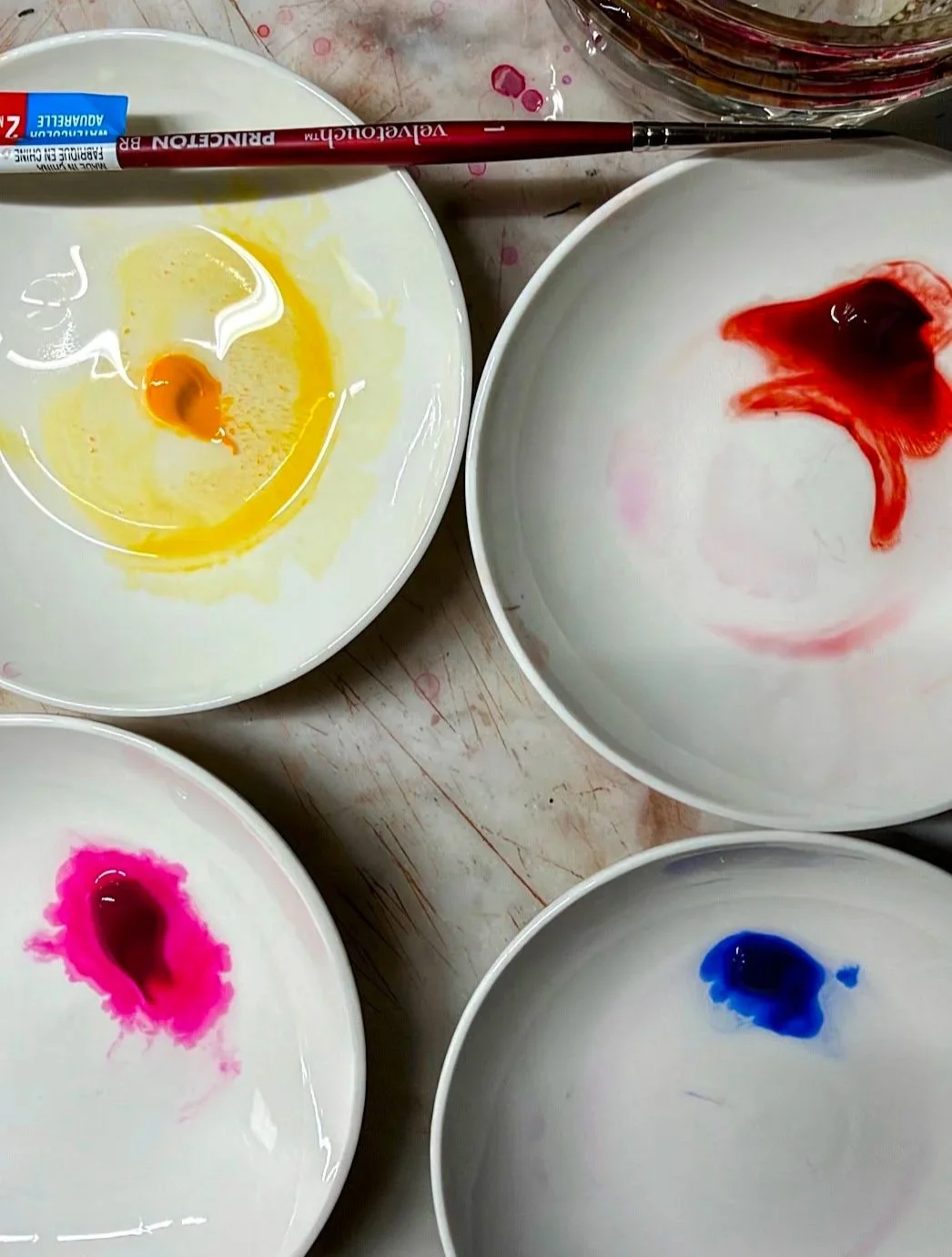
Back in the studio, I began exploring the colors. Not simply trying to reproduce what I had seen, but looking for the relationships that made this flower feel so alive.
It's one of my favorite parts of watercolor. A little yellow changes how we experience a red. A violet shadow makes a pink feel luminous. Colors have a way of bringing one another to life.
Perhaps people do, too.
Understanding the flower
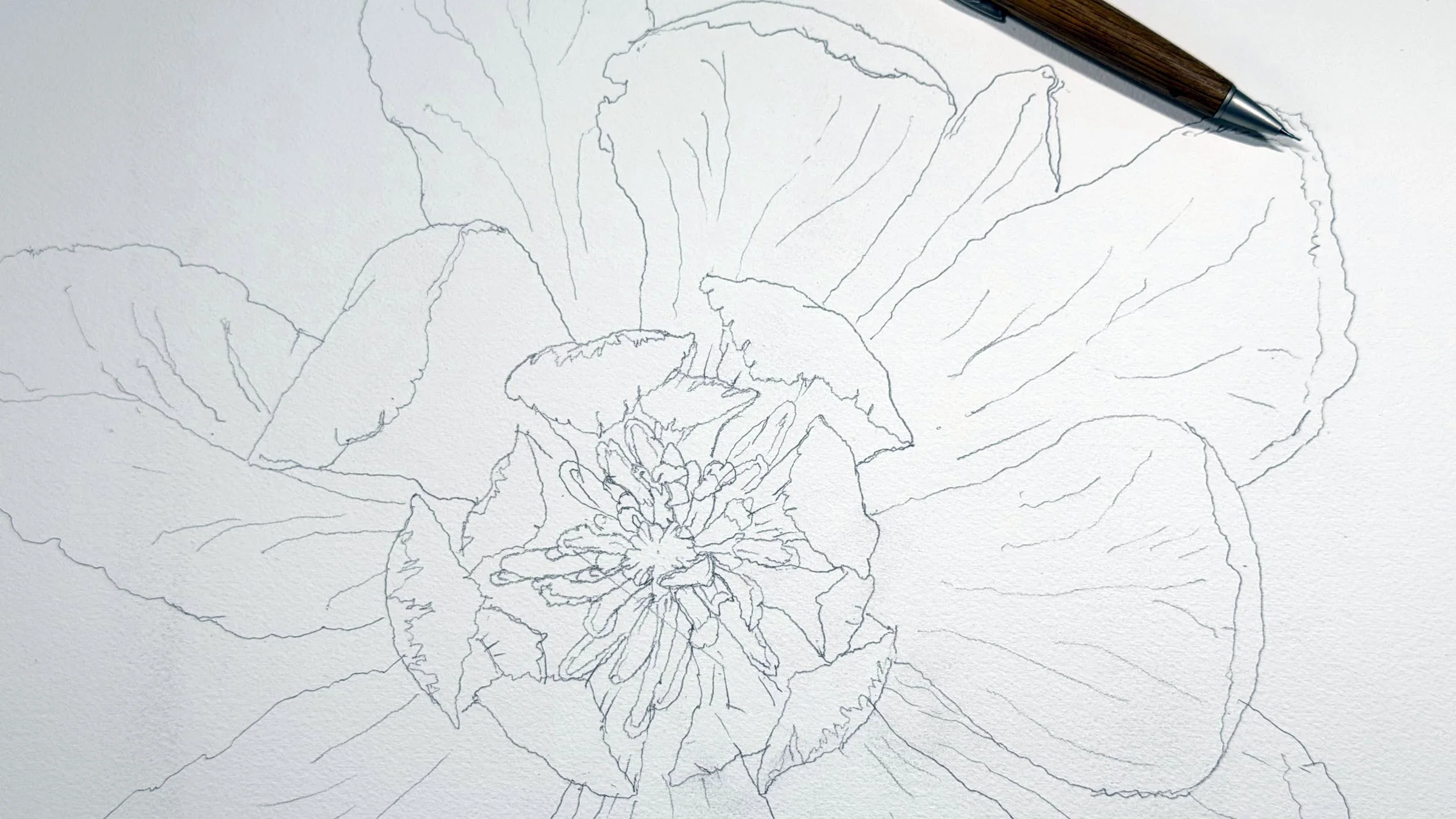
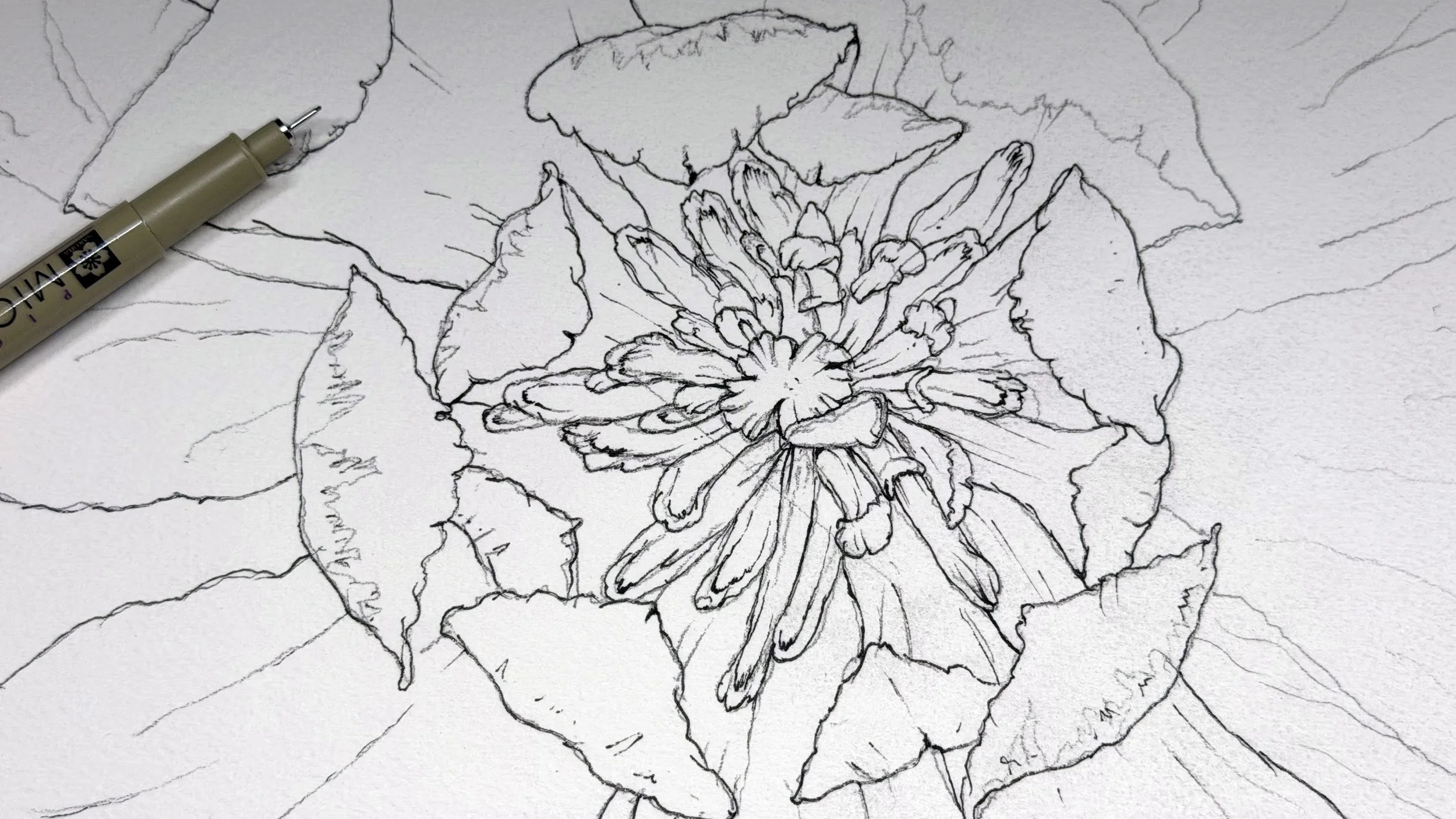
Then came the pencil drawing, followed by the pen study. Drawing makes you pay attention in a different way. You begin to understand how everything connects, how one shape supports another, how a small curve can change the character of the whole flower.
Drawing is a way of spending more time with something. There’s an intimacy in that: the longer I stay with a flower, the more I begin to see what someone else might love about it.
The importance of waiting
By the end of May, all I had was a rough initial sketch and a selection of colors. I knew what had caught my attention, but I still couldn't quite see the painting in my mind.
So I put everything aside.
For several months.
We're so accustomed to thinking that progress means doing something. But sometimes ideas need room to grow without our constant attention. I would return to this flower in my thoughts, without knowing exactly what I was waiting for.
Looking back, I know why I needed those six months. I needed time to sit with what the flower meant to DeeAnn and notice what it was beginning to mean to me. Only then could I see how both feelings might belong in the same portrait.
Taking the leap
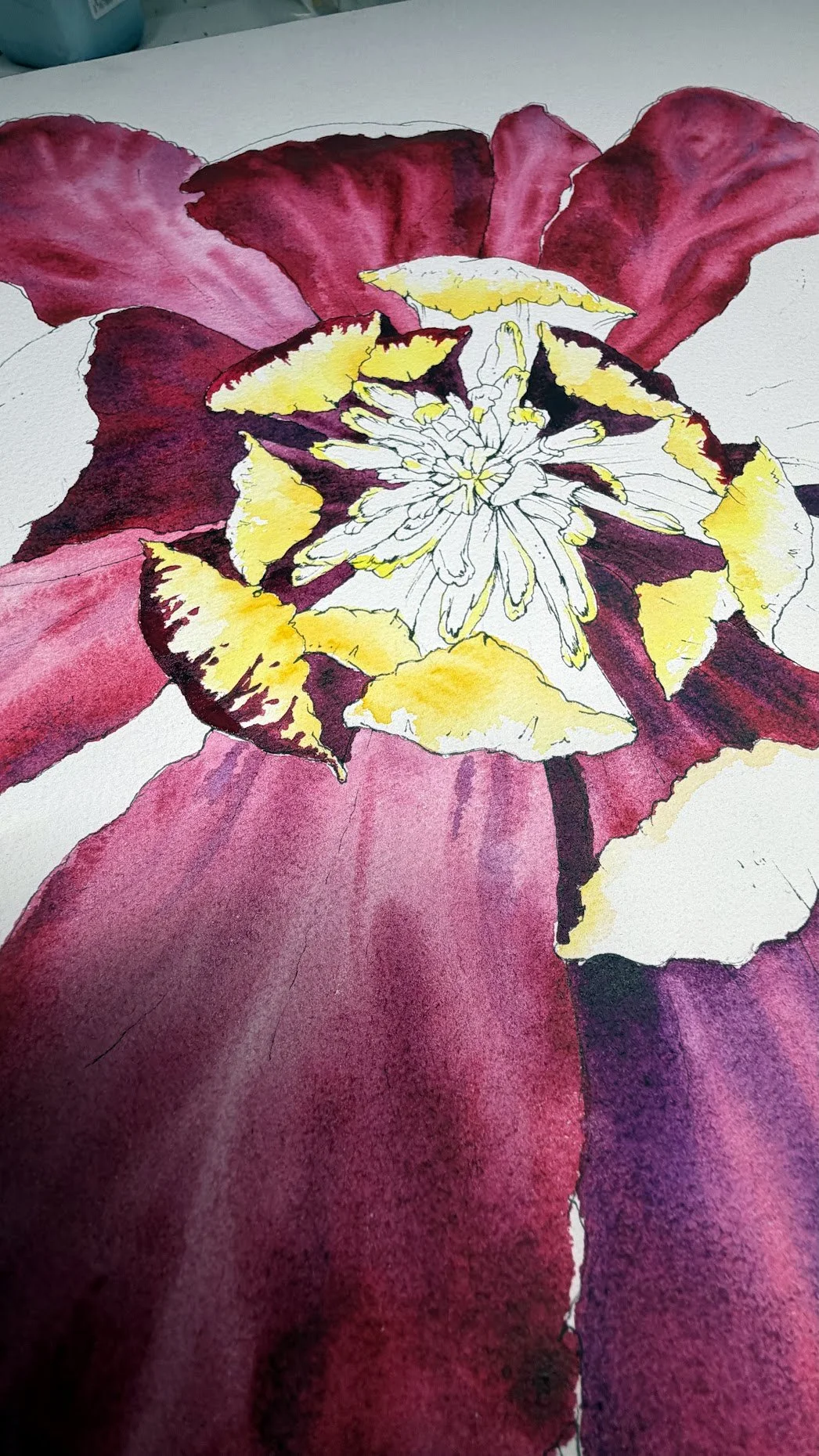
DeeAnn wanted a larger painting, 18 by 24 inches, a scale I'd never attempted in watercolor. I had to rethink how I worked, how the colors would move across the paper, and how to give the flower room to come alive.
For months, I wasn't quite ready. Then, one morning in November, I woke up with a feeling of absolute clarity. Today was the day.
And after all those months of thinking, looking, and waiting, the painting came together in just three days.
It's funny how that happens. Sometimes what looks like three days of work is really six months of preparation. The hardest part isn't always doing the work. Sometimes it's knowing when you're ready to begin.
Letting it come alive
I could have painted every petal exactly as it was and still left out what mattered. The flower meant something to DeeAnn before I ever stood in her garden. What I felt there was mine, but it began with seeing how much it meant to her.
I kept thinking about that as I laid one transparent wash over another. Where two colors meet, you see a third color, though both are still there. That was what I wanted from the portrait: one flower that could hold what DeeAnn brought to it and what I found there with her.
Coming full circle
Six months after that first visit, I brought the finished portrait to DeeAnn.
There’s something deeply personal about the plants we choose to grow. We wait for their first blooms, watch them fade, and look forward to seeing them again. After a while, they become part of how we mark the passing of time.
I like to think that long after the blooms have faded, DeeAnn will pass the painting and catch herself looking at the flower the way she did that day in the garden.