The geology stretches your sense of time. The openness alters your sense of space. Working on site allows the landscape to adjust perception—so what you paint reflects not just what you saw, but how the place changed you.
These studies were box-timed to 30 minutes, in Mosaic Canyon, Golden Canyon, Artist Palette, and the Mesquite Dunes—where vast silence reshapes your sense of space, and the terrain unfolds in layers of stone, wind, light, and the quiet force of water that carved much of it.
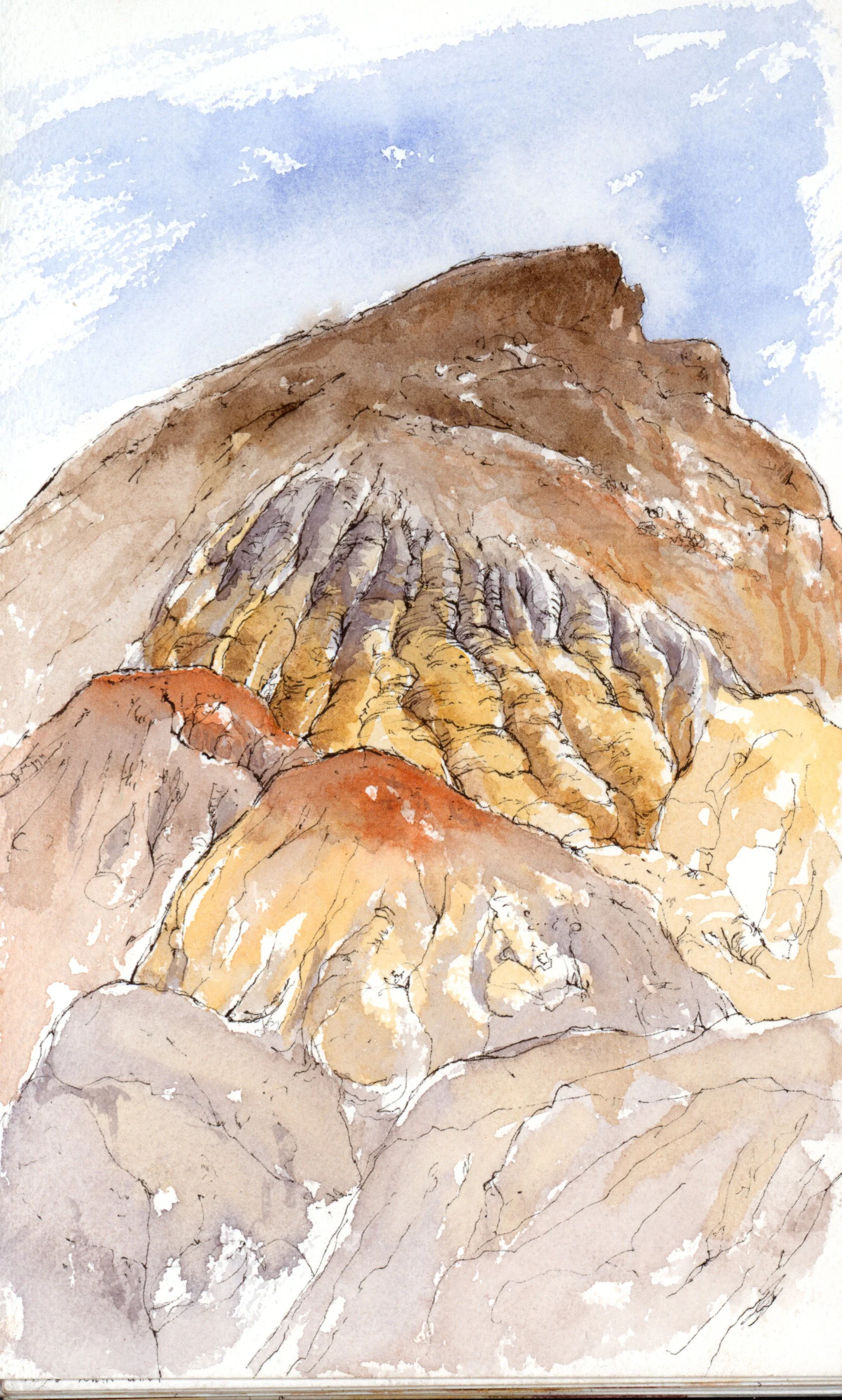
Cliffs near Artist’s Palette — iron, manganese, and mineral traces turning geology into color.
Mosaic Canyon: learning to notice quiet shifts
Breccia fragments—shattered rock fused back together under immense pressure—form these dolomite walls. What appears pale and quiet was once fractured, crushed, and bound deep underground.
Then came water.
Flash floods tore through the narrow passage, carrying sand that polished the marble smooth and carved curves that feel almost impossible—stone bending like something once fluid.
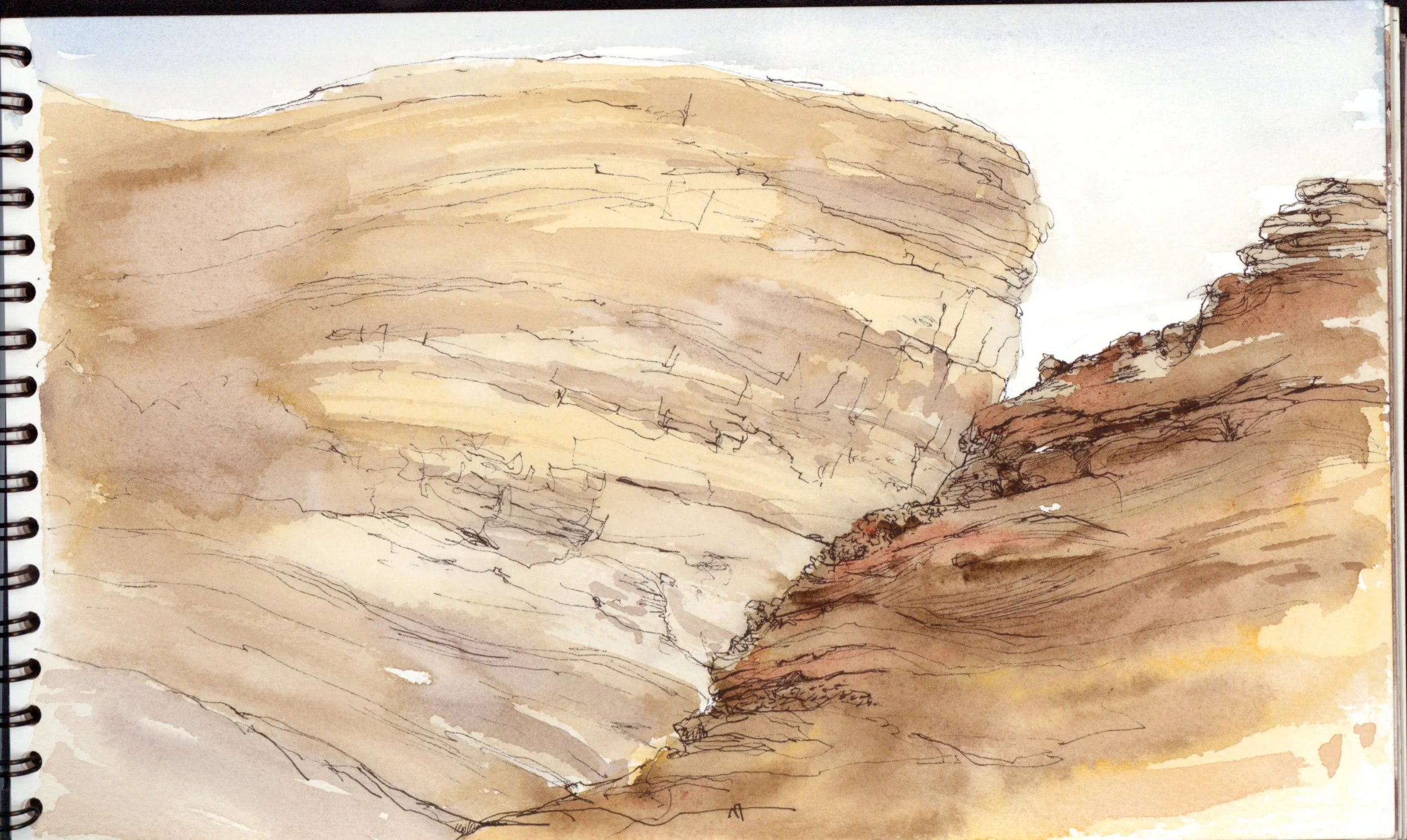
Water carved what pressure first created.
At sunset, the canyon shifts again. Warm light slides across the stone. Shadows cool into violet. The force that shaped it feels suspended in stillness.
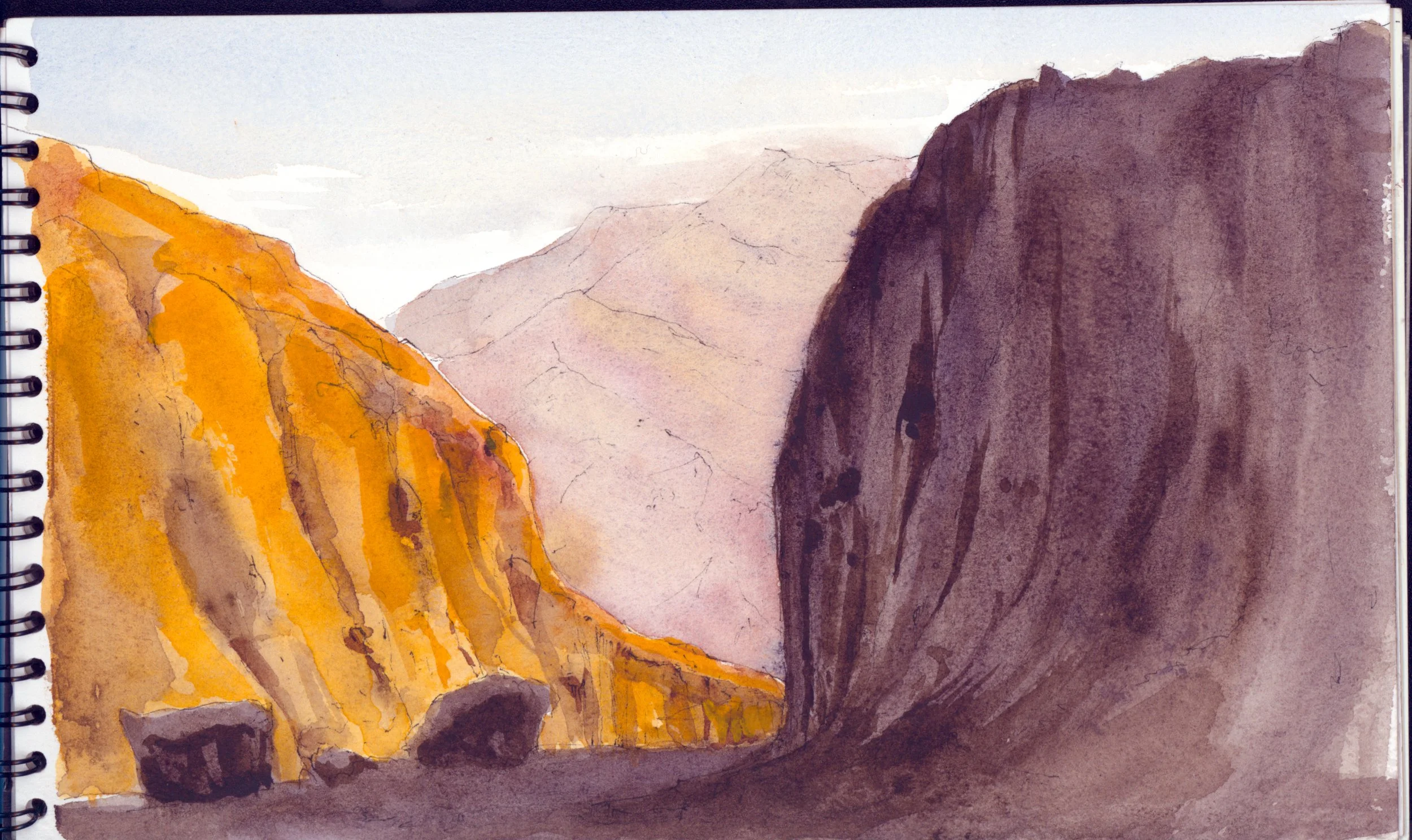
Evening light across polished dolomite.
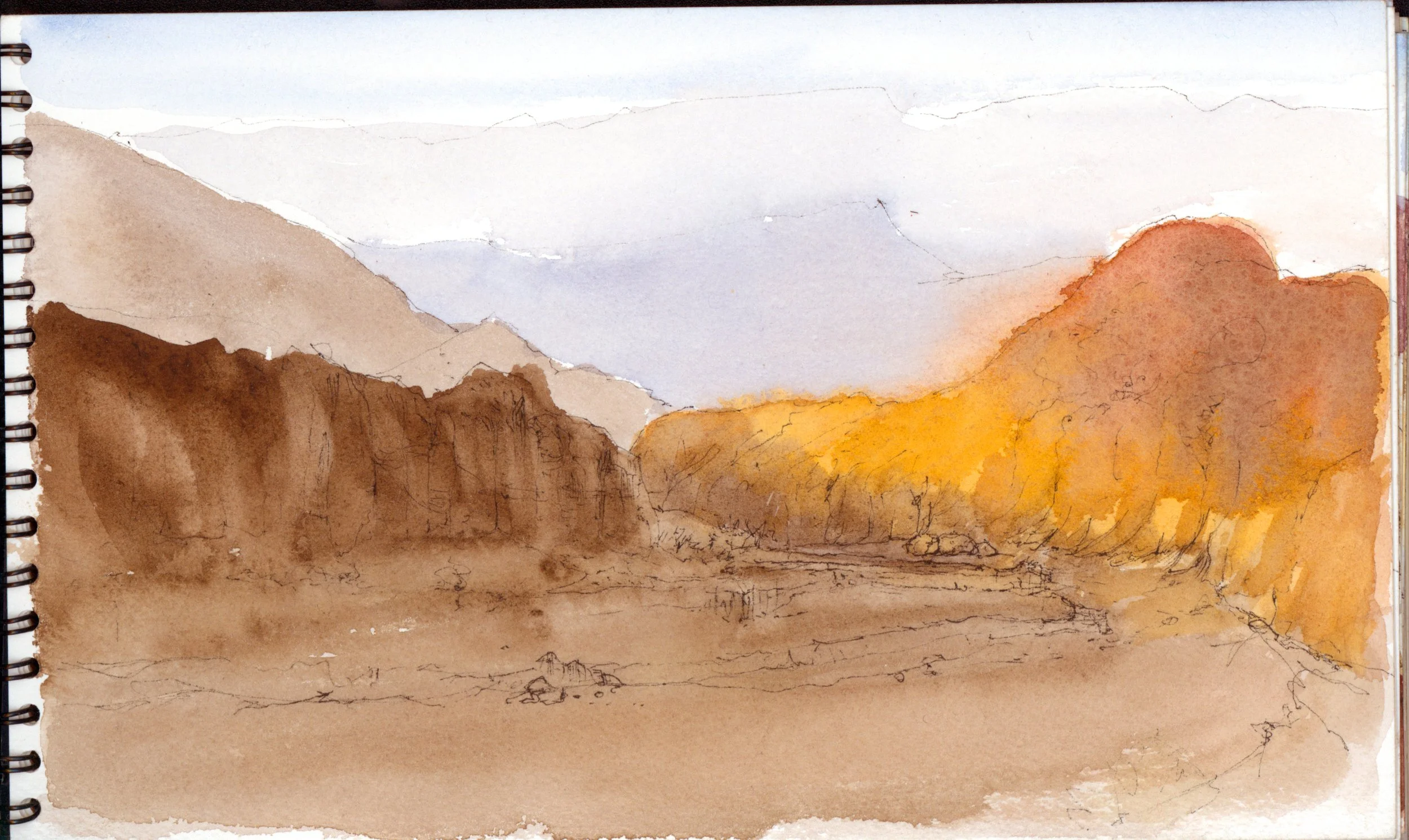
Painted in under twenty minutes, chasing the last warmth of sunset.
The canyon stands so silent now.
But you can feel what shaped it.
And that awareness changes how you see.
Golden Canyon, in conversation
Golden Canyon rises in tilted bands of ochre and rust, iron-stained sediment lifted and exposed by tectonic extension and erosion. The walls feel immense, almost architectural.
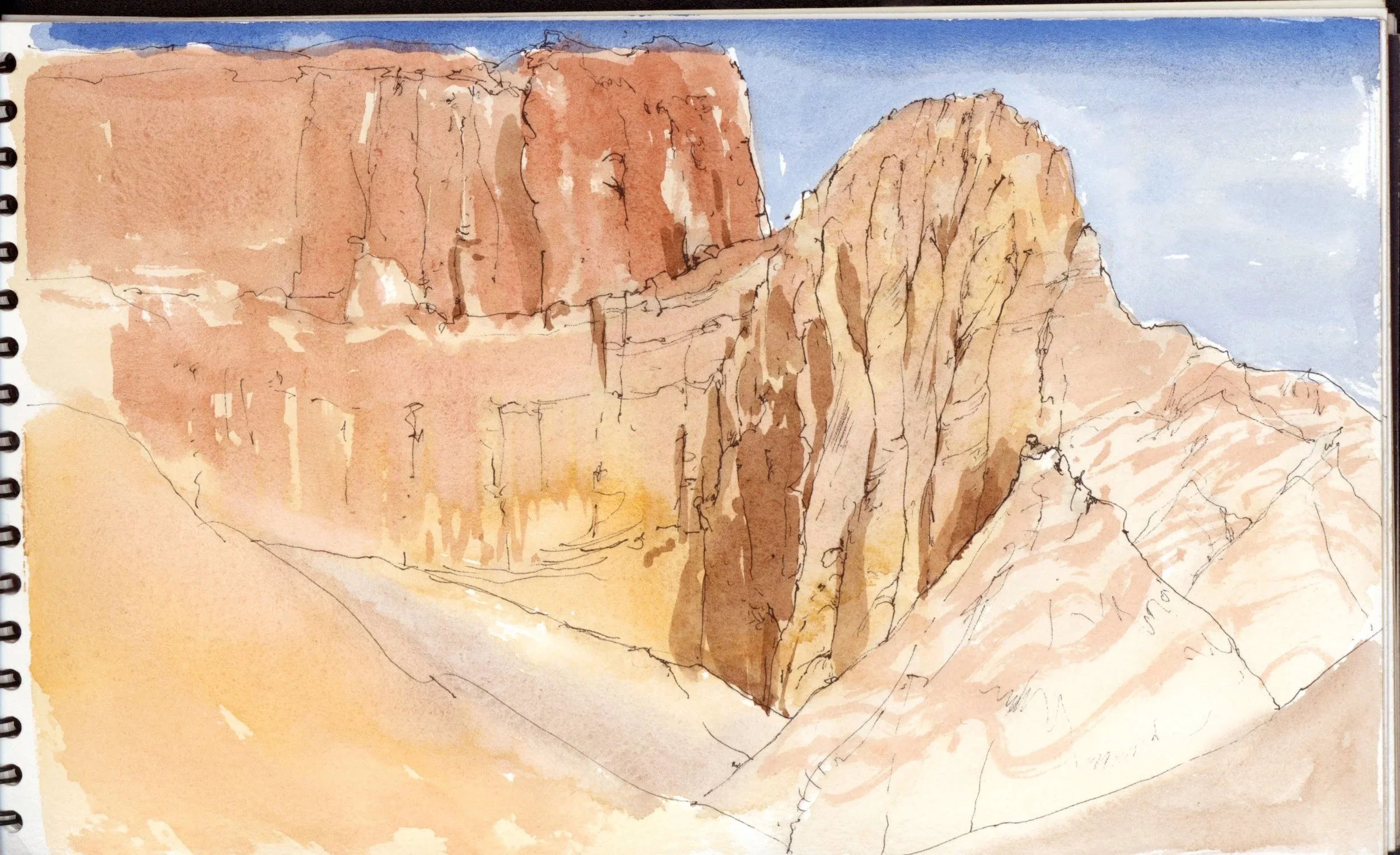
Cathedral Rock. Bands of color, shifting forms.
As I worked, people stopped—travelers from India, China, Australia, Italy—and you could feel the shared curiosity. Not about technique, but about how to stand in a place like this. How long do you stay? Where do you let your eye settle first? How do you take in a landscape shaped over millions of years without feeling overwhelmed? The conversation became less about painting and more about wonder—about giving yourself permission to look slowly, to trace the tilted bands of Cathedral Rock, to notice how late light slides across its layered planes. Even as I finished a study in twenty minutes, holding the main structure before the light shifted, what lingered was the collective desire to experience the site more fully.
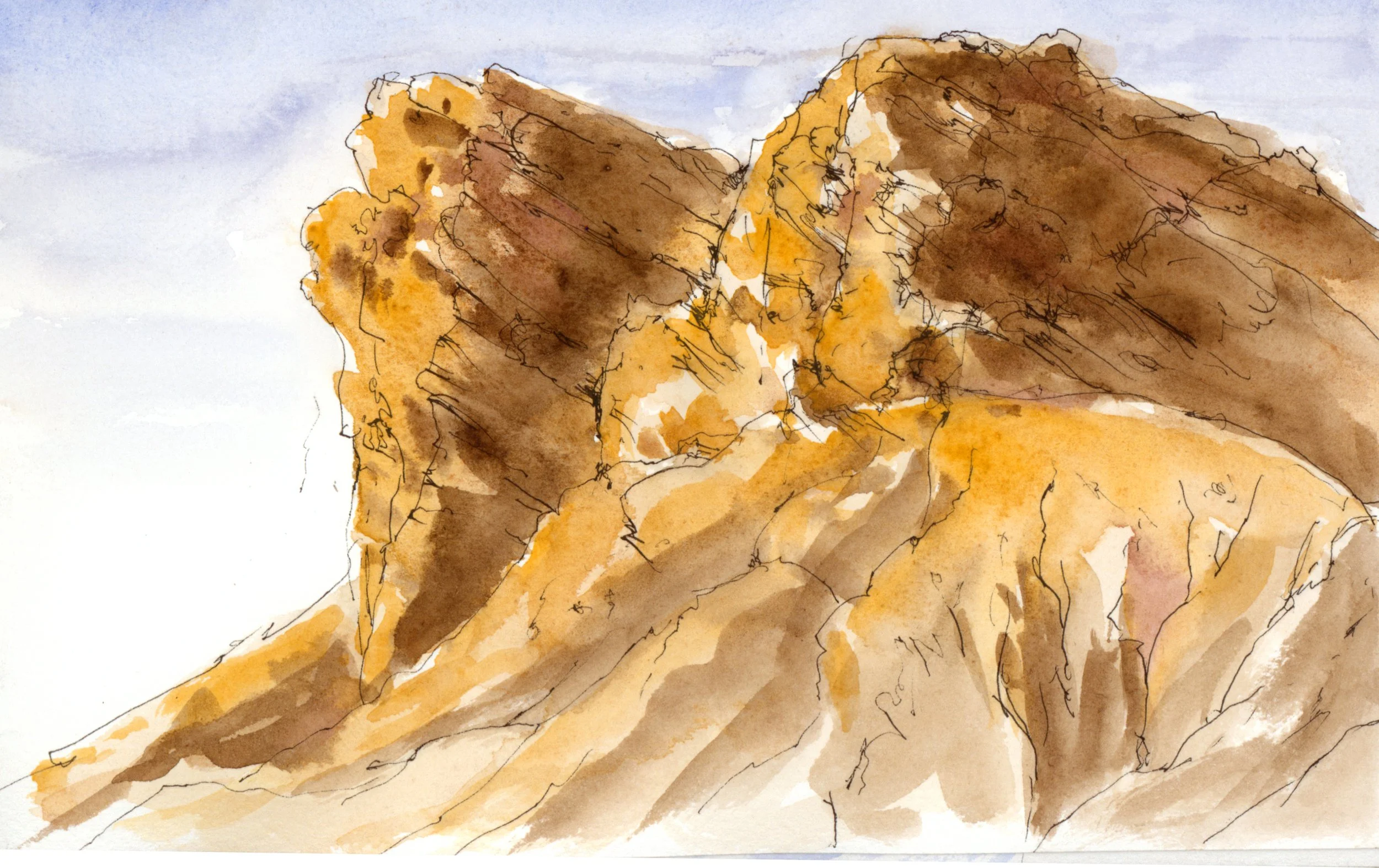
Golden Canyon: Powerful cliffs, shaped by pressure and exposure—much like us.
Mesquite Dunes as space in motion
The Mesquite Dunes feel almost abstract.
Wind redraws the surface constantly. A ridge is defined not by line, but by a subtle shift in value. The mountains in the distance turn rose and violet as light lowers, and what looks empty begins to feel immense.
There is very little to hold onto here. And that is the point. The dunes ask you to trust simplicity—to see how a single transition from light to shadow can carry an entire landscape.
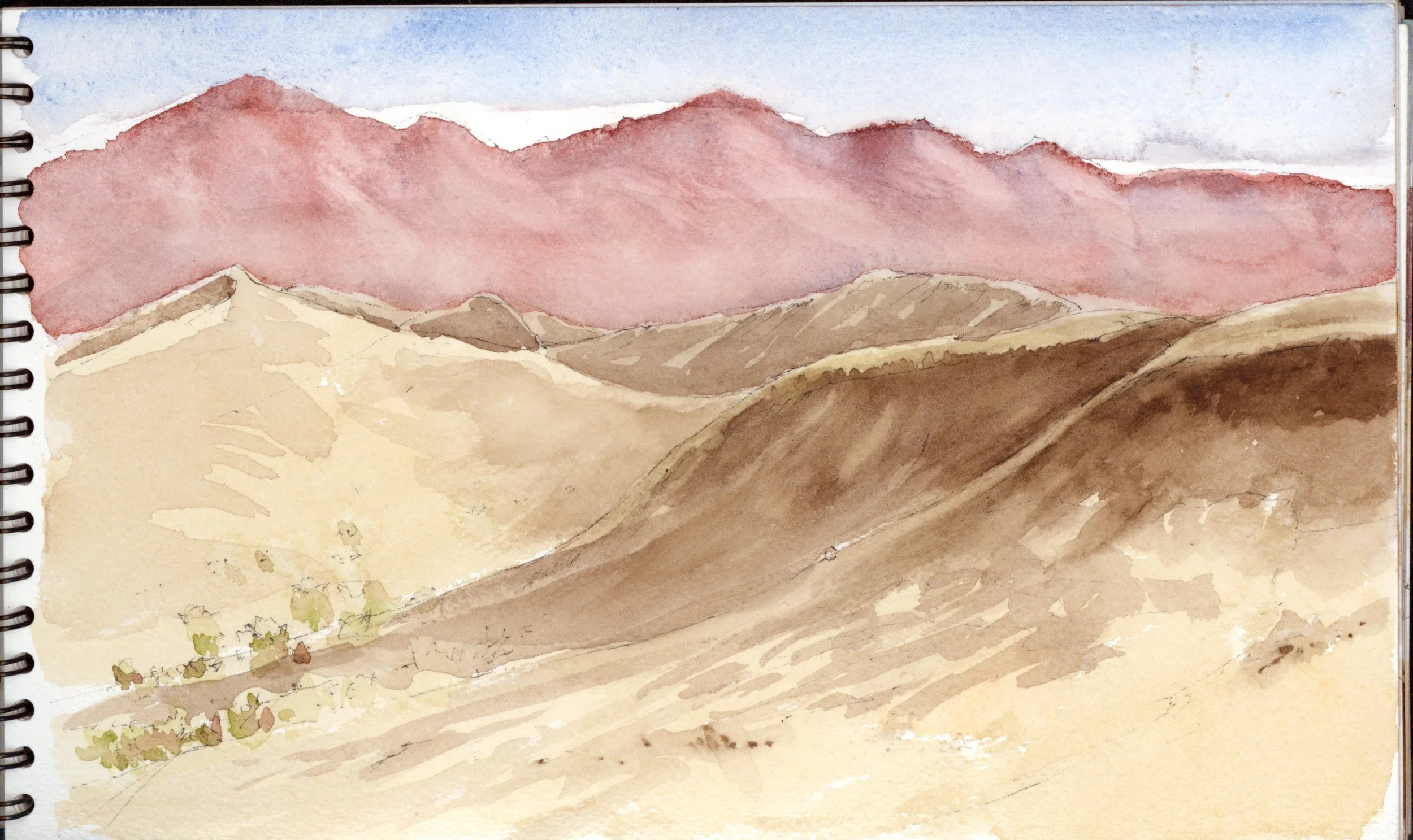
Mesquite Dune: light defining form in shifting sand.
As I worked, a hiker paused and offered to take a photo, and we fell into conversation about cycles—erosion, tectonic shifts, the slow violence that lifts and reshapes the land over millions of years. We spoke about how everything here has moved, fractured, risen, and worn away. And yet, standing in the dunes, nothing seemed to move at all. The wind had stilled. The surface lay quiet. Painting in that moment became less about control and more about holding the paradox—immense geological motion held inside absolute present calm.
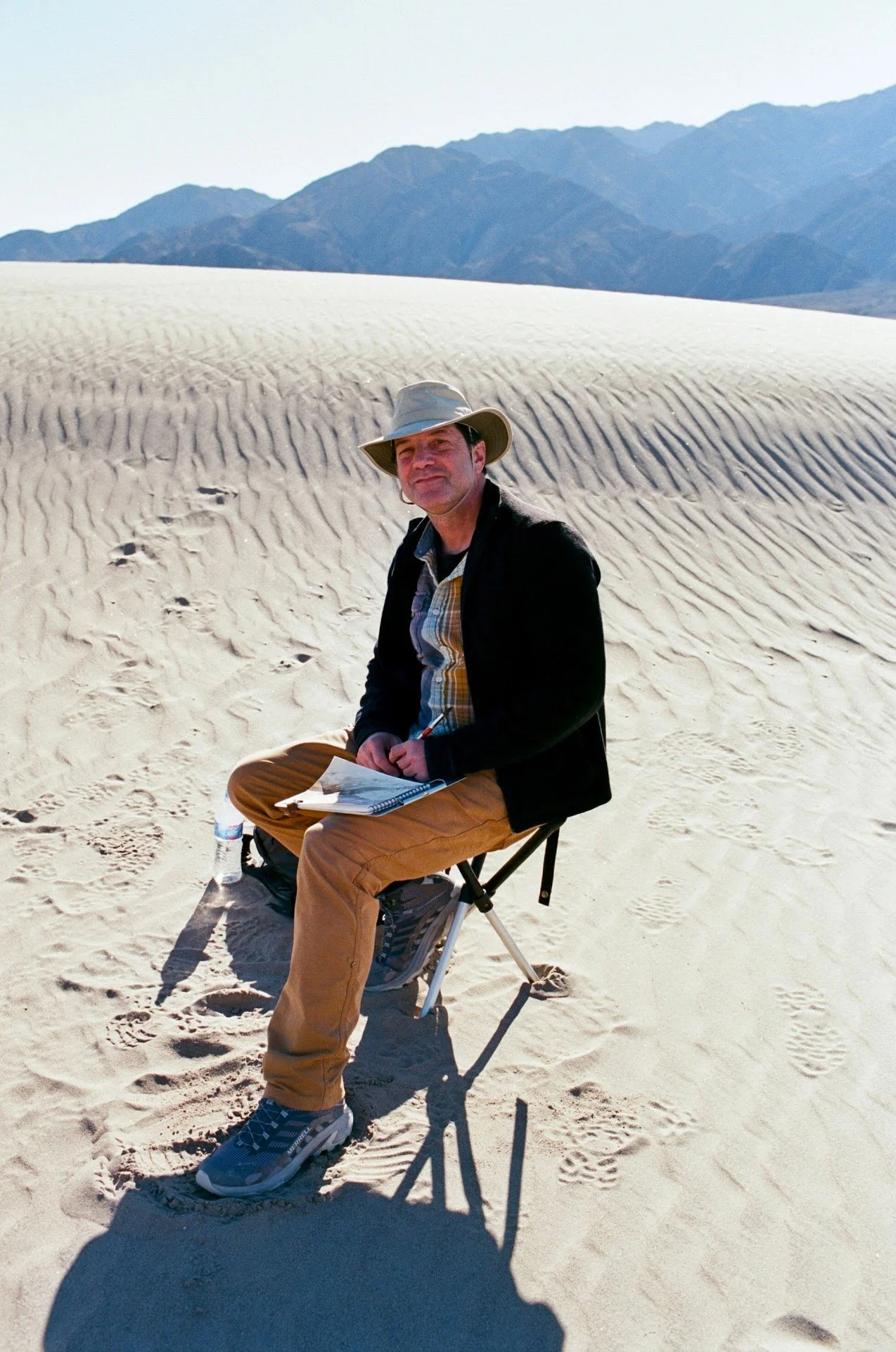
In the dunes, working with a weight-sensitive kit I can carry for miles on my back.
Photo by Ryan Schaefer
Death Valley reminds you that scale can humble and expand you at the same time. That stone remembers pressure. That water shapes even what seems immovable. You don’t need to arrive as an expert. You don’t need special equipment or a perfect plan. To step into a place like this—whether to paint, to walk, or simply to stand still—curiosity is enough.
