
Creative programs & collaborations
Look closer. Discover something. Make something of it.
What happens when we stop simply looking and begin exploring together?
A painting, a jellyfish, an architectural detail, a scientific phenomenon, or a familiar city square can become the starting point for a creative experience.
I collaborate with museums, cultural institutions, gardens, science centers, and community organizations to design hands-on programs that combine observation, conversation, discovery, and artistic expression.
Every experience begins with curiosity and ends with something made. The medium might be watercolor, drawing, collage, or another form of applied art. What matters is the connection between what we discover and what we create.
No previous art experience is necessary. Curiosity is enough.
From observation to creation
The most interesting discoveries often begin with a simple question: What do you notice?
Rather than starting with instructions for making a finished artwork, these experiences invite participants to look carefully, exchange ideas, and discover something they might otherwise have missed.
Observe. Slow down and pay attention to shapes, colors, relationships, movements, patterns, and details.
Discuss. Share what we notice, explore different perspectives, and ask new questions.
Discover. Make connections between what we're observing and our own experiences, ideas, and imagination.
Create. Transform those discoveries into something tangible through drawing, painting, and other hands-on creative practices.
The process is exploratory, welcoming, and adaptable to almost any subject or setting.
Where curiosity can take us
Art museums & cultural collections
An exhibition becomes an invitation to explore an artist's ideas through our own creative choices.
We might investigate Matisse's expressive use of color, experiment with abstraction, or discover how an artwork's composition shapes the way we feel. Participants then create their own responses rather than simply reproducing what they see.
Aquariums & natural history museums
The natural world offers an extraordinary vocabulary of shapes, structures, movement, and color.
Imagine observing the translucent forms of jellyfish, the geometry of shells, or the intricate patterns of marine life, then interpreting those discoveries through watercolor, ink, or drawing.
Science museums & discovery centers
Scientific observation and artistic exploration share a powerful starting point: curiosity.
Light, color, optical perception, natural patterns, and the structures of living things can become subjects for experiments that move between scientific inquiry and creative expression.
Architecture, urban landscapes & outdoor spaces
A city is an open-air classroom.
Through urban sketching, watercolor, and observational drawing, participants explore architectural rhythms, changing light, perspective, and the relationships between built and natural environments.
Historic buildings, public gardens, waterfronts, and neighborhood streets become places to notice, interpret, and experience differently.
Community spaces & public programs
Sometimes the place itself is the inspiration.
A creative gathering can activate a plaza, park, courtyard, or neighborhood space, inviting people to slow down, connect with one another, and see their surroundings with fresh eyes.
Site-specific sketching and participatory art-making can transform an ordinary encounter with a public space into a shared creative experience.
A collaboration in practice
Feeling first: a Matisse study
SFMOMA · July 2026
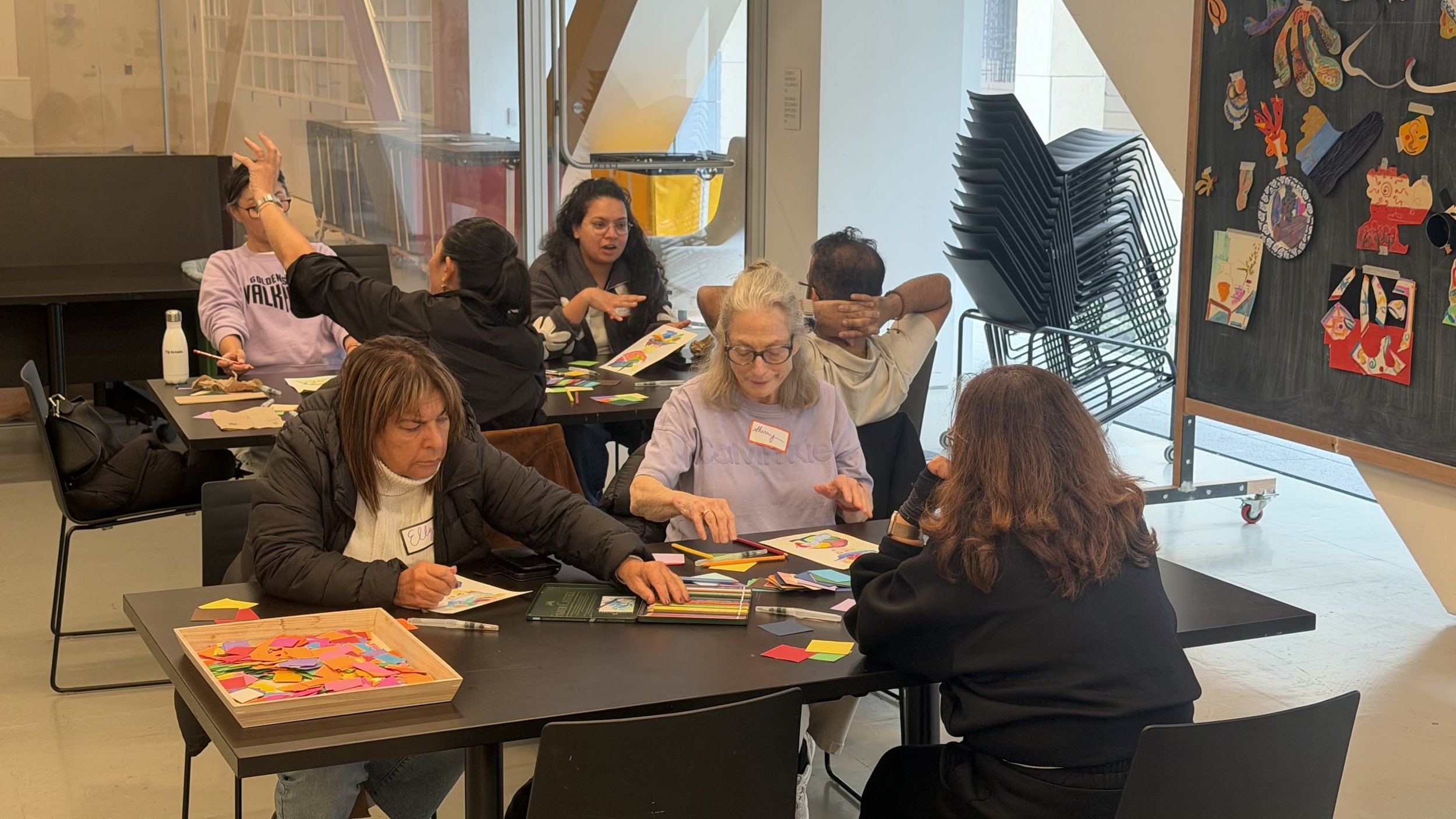
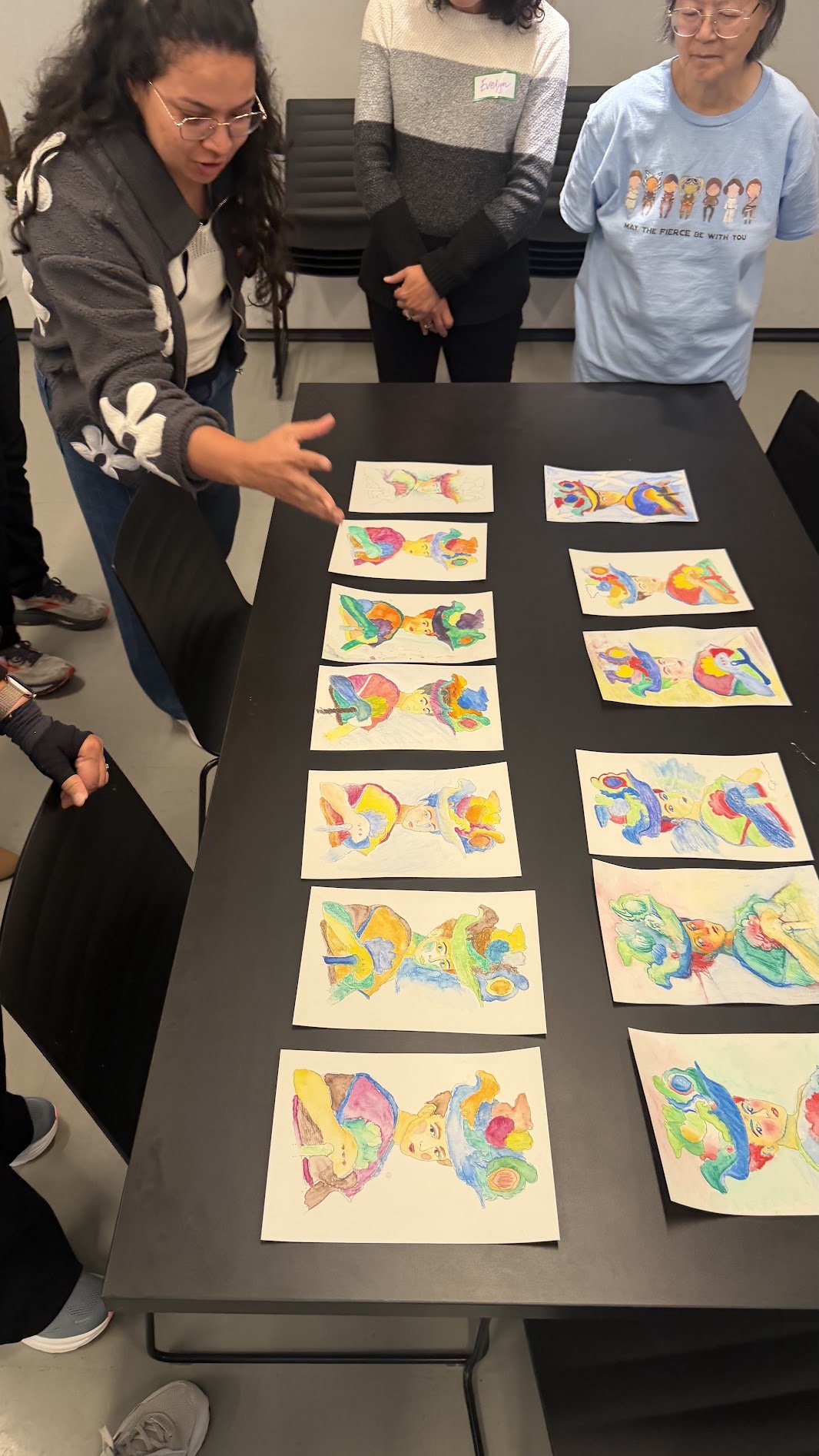
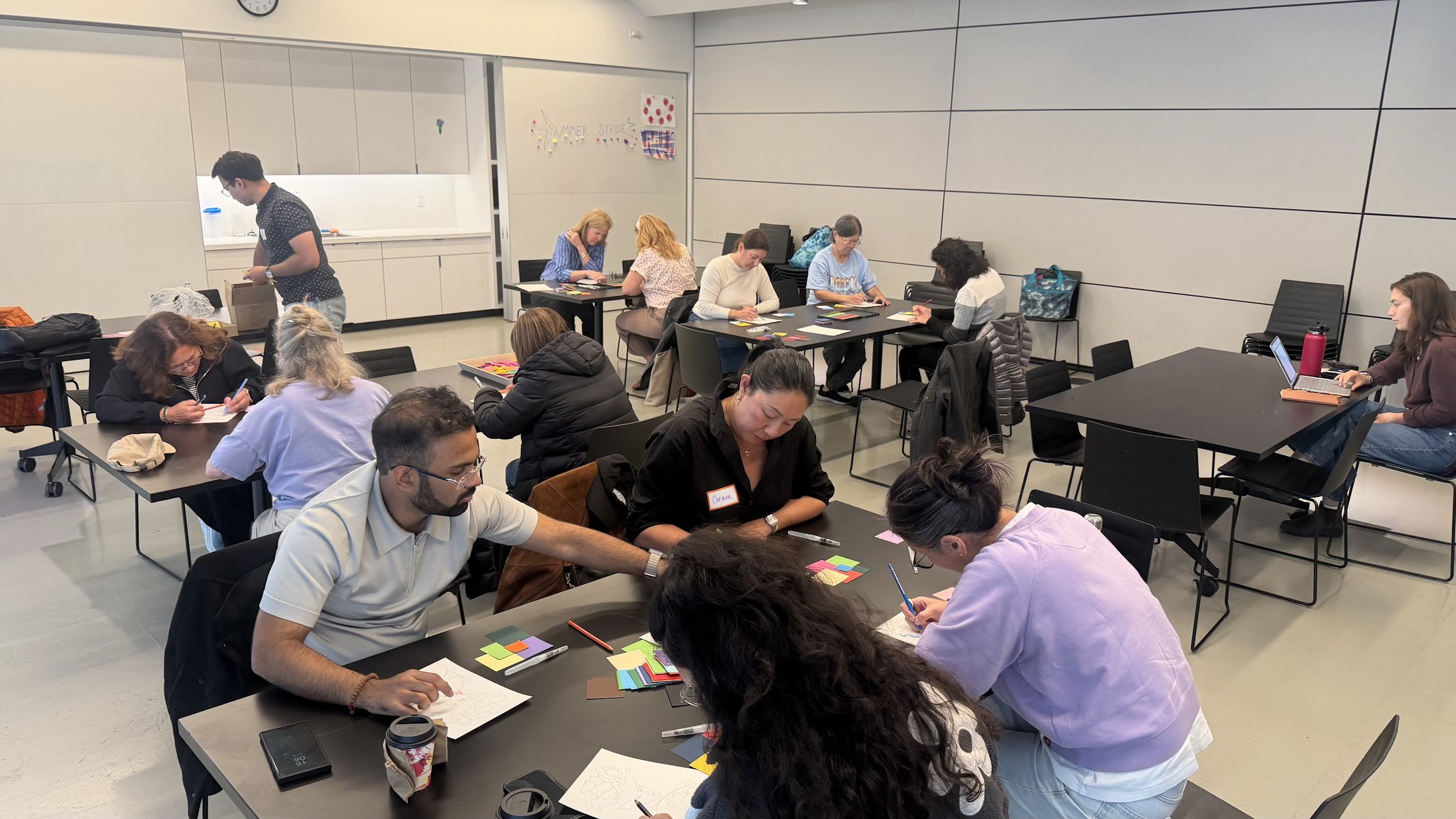
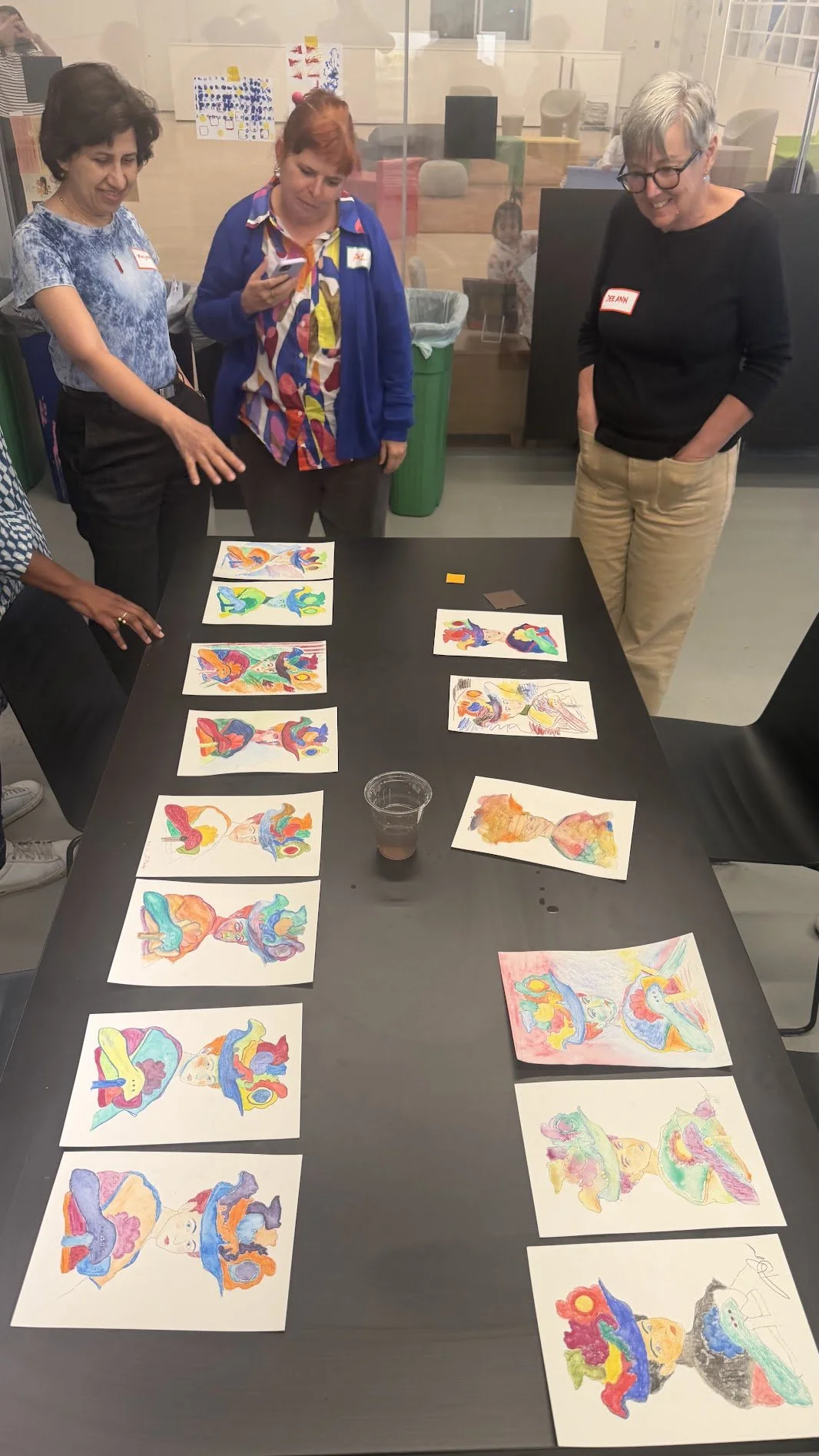
Developed for a public program at SFMOMA, this sold-out watercolor workshop series invited participants to explore color and expression through the work of Henri Matisse.
The workshop unfolded in three phases, beginning in SFMOMA's galleries. Through guided observation and an interactive Q&A, I invited participants to look more closely at Matisse's paintings, noticing details they might otherwise overlook. As we moved through the exhibition, we explored how his choices of color, composition, and form shaped emotion and expression.
Next, through color exercises inspired by Josef Albers, participants experimented with how colors influence one another, alter perception, and evoke different emotional responses.
Finally, we brought those discoveries into the studio, where participants created their own watercolor paintings, using color as a language of personal expression rather than attempting to reproduce a masterpiece. We concluded with a lively group discussion in front of the paintings we'd just created, exploring how different choices of color shaped perception, emotion, and individual expression.
The experience connected looking, questioning, experimenting, and making, giving beginners a way to discover their own visual voice.
This workshop grew out of my own exploration of Matisse's expressive use of color. Read the story behind the workshop and the painting that inspired it.
Designed around your place, people, and ideas
Every collaboration is developed with the host institution, drawing on its collections, exhibitions, environment, programming goals, and audience.
Programs can take many forms, from intimate workshops and exhibition-inspired experiences to public events, community gatherings, outdoor sketching sessions, and participatory activities that bring a space to life.
The creative process is central, but the experience is always about more than learning a technique. It's about making connections, encouraging exploration, and giving people another way to engage with the world around them.
Let's create something together
Have an exhibition, collection, location, or idea you'd like people to experience in a new way?
I'd love to explore how observation, conversation, discovery, and hands-on art-making can bring it to life.